skip to main |
skip to sidebar
July 12, 2011
Moreau Lake State Park
Today, the twelfth of July, is the birth-day
of Henry David Thoreau.
Many Happy Returns of the Day to you sir!
When we walk we naturally go
to the fields and woods;
what would become of us
if we walked only in a garden
or a mall?
Even some sects of philosophers
have felt the necessity
of importing the woods to themselves
since they did not go to the woods,
"They planted groves and walks of Platans"
where they took subdiales ambulationes
in porticoes open to the air.
Of course, it is of no use
to direct our steps to the woods,
if they do not carry us thither.
I am alarmed when it happens
that I have walked a mile into the woods bodily,
without getting there in spirit.
In my afternoon walk I would fain forget
all my morning occupations,
and my obligations to society.
But it sometimes happens that I cannot easily
shake off the village.
The thought of some work will run in my head,
and I am not where my body is;
I am out of my senses.
In my walks I would fain return to my senses.
What business have I in the woods,
if I am thinking of something out of the woods?
HDT, Walking
July 4, 2011
Cole's Woods
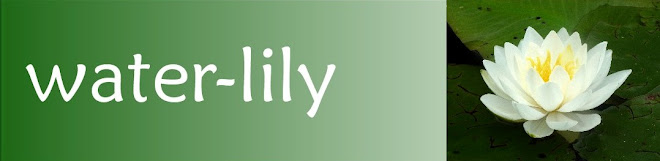
But it chanced the other day that I scented a white water-lily, and a season I had waited for had arrived.
It is the emblem of purity.
It bursts up so pure and fair to the eye, and so sweet to the scent, as if to show us what purity and sweetness reside in,
and can be extracted from, the slime and muck of earth.
I think I have plucked the first one that has opened for a mile. What confirmation of our hopes
is in the fragrance of this flower!
I shall not so soon despair of the world for it …
From Thoreau’s speech at Framingham, July 4 1854,
later published as Slavery in Massachusetts
It’s the day in 1845 that Henry Thoreau officially moved in to his little house by Walden Pond, to spend the next two years there in his own experiment in Independence.
Nine years later, just as Walden was about to be published, Thoreau was invited to speak at a large Abolitionist Rally to be held in Framingham, Massachusetts. It was advertised in the Boston papers as a "Meeting for True Freedom on the Fourth of July." Due to recent events, such as the Anthony Burns Affair (see links below,) feelings were running high. Abolitionists spoke out against state and local governments who had laws supporting slavery. After speaking at the morning session, William Lloyd Garrison, editor of The Liberator, burned the Constitution in protest !
(It helps to understand that said Constitution would not be amended to outlaw slavery until eleven years later, in 1865)
Thoreau’s turn to address the crowd of 2,000 came in the afternoon –
after rousing speeches by Wendell Phillips and Sojourner Truth.Tough acts to follow !
Click here and here for two fascinating accounts of that day.
(If anything, it shows that, contrary to what many think of him today, Thoreau was no hermit, but was actively involved in social issues of his day.)
***
My Independence Day was a somewhat quieter than Henry’s was back then.
After a very busy week at work, it was nice just to have a few hours to relax.
I went for a walk in the woods with a friend.
It was my hope to find two particular plants, seen recently in Moreau Lake State Park, in a Warren County location. What I needed was dry sandy soil, and open sunny areas -- like those under powerlines.
There is a place like that in Cole’s Woods, a green gem set in the middle of Glens Falls. It is forested, with Halfway Brook meandering through its many acres, and also has a scruffy powerline section, with just the conditions I was looking for.
At the very last minute, I stopped at the house of my friend Ruth, who considers this woods her special place.
She enthusiastically joined me, and led me right to the sort of place I was looking for.
Along the way, the butterflies were flitting here and there –
And the slugs nodded to us as we walked past.
Very soon, we did see the first plant I was seeking – a wood lily !
Ten minutes after that, the second plant almost tripped us up as we walked by it – a clasping milkweed !
We found others of their kind out onlong the powerline trail.
I was very happy to find these new plants, and to be able to anticipate where they might be found. Just lucky, I guess.
We rambled along the powerline trail, finding other treasures.
Like ripening black raspberries.
Tonight there are many celebrations of our Nation’s birth-day planned,
most of them involving fireworks and other noisy explosions.
And lots of flag-waving.
My patriotism is of a different sort. Probably not in line with today’s definitions of it.
The United States as a nation has come a long way, and still has a long way to go toward her ideals. But I do love America. In that long-ago summer when I travelled to Alaska and back, camping all across this country, I came to love the land itself. From sea to shining sea.
So it’s three cheers
for the Red
Black Raspberry
White
Enchanter's Nightshade
and Blue-green !
Ebony Jewelwing
And yellow…
Canada Lily
And green …
Solomon's Seal
And orange …
Butterfly weed
July 2, 2011
Pyramid Lake, NY
Near the lake, which we were approaching with as much expectation as if it had been a university, -- for it is not often that the stream of our life opens into such expansions, -- were islands, and a low and meadow shore with scattered trees.
HDT, The Maine Woods
Today I happily returned to Pyramid Lake, for an excursion organized by Jackie Donnelly to explore the plant life in this Adirondack setting. Pyramid is a retreat center, and on this summer weekend, there were youth groups enjoying the great outdoors here too. This is one of Jackie's special places - she volunteers here - and she delighted to share it with us.
Just one hour's drive from my front door, I can step out onto land so wild and interesting, it's like visiting another planet.
At the lake, our morning party consisted of Jackie, myself and Ruth Schottman. Once again it was my pleasure to follow in their footsteps – er, in this case, paddle-dips – and learn something new.
The center sits along a small portion of the northern shore, and the rest of the lake and surrounding forest is classified as Adirondack wilderness.
In the first cove, we spotted Rose Pogonia – we would see much more of it throughout the day.
Water lobelia, water-lilies and irises were all out and looking beautiful.
No pickerel-weed flowers yet -- it seems late this year.
We saw a cove full of mini-lilies, 2-inch replicas of the familiar sweet white lily. Are they a separate variety?
Tiny sundew plants sparkled on fallen logs, in terrarium-like mixes here and there.
Jackie led us to the far end of the lake, where a cedar swamp contained some treasures she hoped to share with us.
It is remarkable how little these important gates to a lake are blazoned. There is no triumphal arch over the modest inlet or outlet, but at some undistinguished point it trickles in or out through the uninterrupted forest, almost as through a sponge.
HDT, The Maine Woods
A sponge, indeed ! We put ashore and gingerly stepped (or stumbled) among tree-roots, onto deep sphagnum moss covered with delicate bog-loving plants.
And, lacking a "triumphal arch," Jackie and Ruth wisely brought along orange survey-tape, to mark our trail, so that we could find our way back to our boats. It made me think of Hansel and Gretel in the dark spooky forest, leaving a trail of breadcrumbs. (And we all know how THAT turned out.)
This was bushwacking at its finest.
I kept nervously checking over my shoulder at our backtrail, for this cedar- swamp was so thick that it would have been very easy to get lost.
Just as I was thinking about that possibility – who would ever find us ? and when ? – I saw deer fur and some bones. Only the shadow of this deer remained. Perhaps she went peacefully, and just became one with the swamp ... ? My timid mind considered other possibilities.
But I soon got over it. My companions kept pointing out so many plants that were new to me. At our soggy feet was spread an amazing assortment of green treasures.
Dalibarda--
One-sided Pyrola, Twinflower, Snowberry, and Wood sorrel --
Though Jackie did not find the one particular plant she had hoped to show us here, we didn’t care. The mosquitoes were surprisingly lackadaisical, and we could take our time exploring.
I could see my own reflection in a glistening dewberry -
With the loss of the usual visual cues, the cardinal points became ...
less obvious.
Lines between things became blurred.
After just a few minutes in this emerald forest, it was difficult to discern what was land, and what was water.
What was sky, or what was earth.
It was a pleasant, slightly hypnotic feeling.
The Sirens of the swamp are very real.
All this time, we were never more than fifty feet from where we put ashore!
Back in the boats (which we had a little spot of trouble locating, even WITH the orange tape), we continued around the far side of the lake, in the lee of Bear Mountain, which rises steeply above with water.
Under the gaze of the Lady of the Lake,
we floated past giant pinkish boulders covered with green and white lichens.
And giant fishing-spiders !
Damselflies were everywhere, clasping in courtship. Ruth had several of them hitch-hiking on her kayak. I even saw two of them hooking up underwater.
Glub. Glub.
There was fireweed (complete with teensy fly on the left)
and a basking water-snake -- right at eye level !
I think I put the camera up more to protect my face, than to take his picture.
We came ashore back at camp for lunch, and sat at a deck overlooking the beach cove. Entertainment was provided by a large snapping turtle, who was trying unsuccessfully to make friends with the girls on the swimming-float.
At lunch we met up with the fourth member of our boating party, Nancy Slack, an expert on mosses and lichens. She had just missed us in the morning, and had done some solo botanizing on the lake. If she had been with us, we would probably still be in that swamp, learning our mosses. She joined us for the afternoon paddle into the swampy outflow of the lake.
It was a lovely day, and despite seeing more lovely things in those shallows - things like salamander eggs and sheep laurel --
-- I physically ran out of gas soon after lunch, having worked late the evening before.
It was time to call it a day.
Once again I am grateful to accompany such knowledgable friends, who lead the way to (formerly) spooky places like impenetrable swamps, and expand my horizons.
Ruth shared her field-notes with us later, and it is strikingly similar to one of Henry’s lists from The Maine Woods. Here is what he noted on one of his trips:
The prevailing flowers and conspicuous small plants
of the woods, which I noticed, were:
Clintonia borealis,
linnæa,
checkerberry (Gaultheria procumbens),
Aralia nudicaulis (wild sarsaparilla),
great round-leaved orchis,
Dalibarda repens,
Chiogenes hispidula (creeping snowberry),
Oxalis acetosella (common wood-sorrel),
Aster acuminatus,
Pyrola secunda (one-sided pyrola),
Medeola Virginica (Indian cucumber-root),
small Circæa (enchanter’s nightshade),
and perhaps Cornus Canadensis (dwarf cornel).
Thoreau always sniffed at Emerson’s suggestions to join him at the Philosopher’s Camp (click for link) in the Adirondacks; preferring the wilds of Maine instead.
But I think he would have liked this place.
June 25, 2011
A half- mile up the road
I have just been through the process
of killing the cistudo for the sake of science;
but I cannot excuse myself for this murder,
and see that such actions are inconsistent
with the poetic perception,
however they may serve science,
and will affect the quality of my observations.
I pray that I may walk more innocently and serenely through nature.
No reasoning whatever reconciles me to this act.
It affects my day injuriously.
I have lost some self-respect.
I have a murderer’s experience in a degree.
-- HDT Journal, August 18, 1854. He had been working with naturalist Louis Agassiz, providing specimens of local flora and fauna.
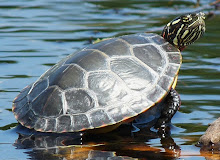
Today I am driving down Meadowbrook Road, and up ahead, I see a turtle slowly walking across the road. It is a small snapping turtle, several years old. She is heading for a large puddle of water on the other side of the road.
It is heartening to see her, since this month -- the month of turtle-nesting -- I have seen more dead turtles by the roadside than living ones.
In fact, I have "rescued" several turtles who were crossing a road. This year, I have gone so far as to keep garden-gloves (for handling smaller turtles) and a small plastic shovel (for turtles who are too large for me to want to put my hand anywhere near them) in my car. Nature Girl to the Rescue is the title of the self-congratulating movie now playing inside my head.
My joy turns quickly to alarm, as it becomes apparent that this will be an almost impossible journey for her, given the number of cars going to and fro at this spot.
So, lover of turtles that I am, I pull over as soon as possible, to the nice wide shoulder of the road, next to the spot where she is trundling across the pavement toward the other side. I throw the car into park and get out. I know another car is approaching right behind me, and there isn’t much time.
Fortunately, the turtle has made it as far as the yellow center line of the road. It seems she is at least safe from that car behind me.
But as that next car comes swiftly along, it doesn’t slow down, but instead swerves away a little bit, and
whump whump
That sickening sound – as the car passes,
the turtle is now belly up and most certainly dead,
and I am jumping up and down in the middle of the road,
yelling at the unseen driver “you ass ! you stupid ASS !”
though by now the car is a mile down the road,
and it is myself who is the ass.
All too late I realize that the car must have swerved to avoid ME,
that if I had not been standing there, that turtle might have LIVED.
In my efforts to help it, I killed that turtle,
as surely as if I had run over it myself.
I slowly put on my garden-gloves.
My heart is a heavy, heavy stone.
I walk out morosely between oncoming cars, whose drivers stare uncomprehending at me,
and carry what’s left of the turtle
over to the water she had been seeking.
It is a costly lesson.
Like Thoreau, I cannot excuse myself.
But can you tell me, has this sort of thing ever happened to any of you?
June 3, 2011
Concord, Massachusetts
The Musketaquid, or Grass-ground River, though probably as old as the Nile or Euphrates, did not begin to have a place in civilized history, until the fame of its grassy meadows and its fish attracted settlers out of England in 1635, when it received the other but kindred name of CONCORD from the first plantation on its banks, which appears to have been commenced in a spirit of peace and harmony. It will be Grass-ground River as long as grass grows and water runs here; it will be Concord River only while men lead peaceable lives on its banks.
-- HDT, A Week on the Concord and Merrimack Rivers
While in Concord, I had hopes of meeting a friend from the Blogosphere who lives near there, Suasco Al, aka Trashpaddler. In his spare time, he patrols the rivers he loves, and picks up what trash he can. Over the years he has removed thousands of pieces of litter from the waters, quietly and without a lot of fuss. (You can follow his exploits at Trashpaddler.com)
He’s one of my real-life heroes, and keeps me inspired to improve my environment, in ways however small. Dixit et fecit, indeed !
He sometimes travels far afield, and so I wasn’t at all sure we would be able to connect.
We emailed before my trip, and it so happened that he would paddling right in his own home waters, on the Sudbury and Concord Rivers, with Erik, a blogging friend of his from Rhode Island. (That blog is ekilson.blogspot.com) They would be scouting that stretch of water in preparation for a paddle trip that Erik was leading the following week.
In his email, Al gave me a rough estimate of when they might be passing by the Lowell Bridge, so Friday after noon, Jackie and I took our lunch at the Calf Pasture.
We sat on a bench with a fine view of Egg Rock, where the Assabet and the Sudbury rivers meet to form the Concord River. It was the site of important councils between the Native people and the first settlers.
Rivers come together, people come together.
It is a natural meeting-place.
We tidied up a little patch of waterline, in anticipation of their arrival. Didn't want them to land upon a trashy shore ! Jackie was happy to find lance-leaved violet growing along the soggy banks of the river.
Being without internet access back at our B&B, I had to resort to using my new and hardly-ever-used cellphone, and calling the number that Al had given me in our last email. Well, I’m a convert now as to their usefulness.
Standing on the bank of the river, with the water lapping at my feet, I dialed the number and pushed SEND.
Al promptly answered – from his kayak !
“Excuse me a moment, my hat just blew off.”
He was some distance upriver on the Sudbury, and said they would soon be passing by Egg Rock.
Ahoy ! Here they are ! paddling against the wind.
Erik comes in for a soft landing.
It was great to meet them at the very spot where the rivers also come together. To meet friends from the internet, from hundreds of miles apart, and to affirm that we live in more than just 2 dimensions.
We chatted a while, as the guys stretched their legs ashore.
Al and I talked trash.
I marvel at his methods of stowing things on the boat.
He sorts things into recyclables, non-recyclables, and trash.
This is just the overflow:
We even got to see him spring into action, as a beer bottle floated past us, down the middle of the river. It soon joined the other trash that Al had pulled from the river that day. His year-to-date count is approaching 3,000 items.
Erik lined us up for a group photo, which he posted on his blog –
yes, for a brief moment in time, we were
The Four Musketaquideers.
(Without apologies, I share Thoreau’s weakness for dreadful puns.)
Then it was time for them to continue on their journey, and we on ours.
We stood on Lowell Bridge to wave goodbye.
It was a beautiful day to be anywhere near the river.
And the river, a little more beautiful than before,
thanks to people like Al and Erik.
Great to meet you, guys !
And congratulations, Al, on winning a well-deserved
River Stewardship Award at the 2011 Riverfest the following week.
Nothing makes the earth seem so spacious
as to have friends at a distance;
they make the latitudes and longitudes.
--HDT letter to Lidian Emerson, May 22, 1843